
2026-02-11
“Aurum 1006 km powered by Hankook” race rule changes: lower costs for smaller teams to start
Lithuania is still gripped by winter cold, but in racers’ garages cars are already being prepared for the upcoming season. The organizers of the “Aurum 1006 km powered by Hankook” race, which will take place for the 27th time on July 15–18, have announced several rule changes this year that will allow smaller teams to breathe a little easier and compete with a lower budget.
Small yet important changes
The updated supplementary regulations, technical requirements and sporting rules have already been published on the race’s official website. When reading the documents, a number of changes can be noticed, but the most significant ones are outlined in the sporting regulations.
Clause 2.1 states that in the 2026 season, classes other than GT3, GT Open, GT4 and TCR will be granted an exemption regarding tyre usage. All these classes, except those mentioned, will be allowed to use “Nankang” or “Hankook” tyres purchased from the organizer’s official tyre supply partner. A reduced entry fee is also provided for these classes.
“We really want to see as many competing teams as possible in the race, and the level of motorsport in Lithuania has been consistently rising for many years. This also means that the cost of racing itself is increasing. This year we have introduced new rules that will allow lower-budget teams to feel more comfortable competing,” said Darius Jonušis, the main organizer of the race, commenting on the rule changes.
Racers also evaluated these changes positively – the updated rules should lead to lower expenses and greater competition, which will make the race more exciting for both teams and spectators.
“I would say this is a good decision. For teams with limited budgets, it allows them to choose different solutions and save money. Freedom of choice is a very good thing,” commented Povilas Bonkevičius, team manager of “LIK Racing by KTK.” He did not hide the fact that the team has not yet decided which tyres they will use in the upcoming race.
You don’t need the fastest car to race
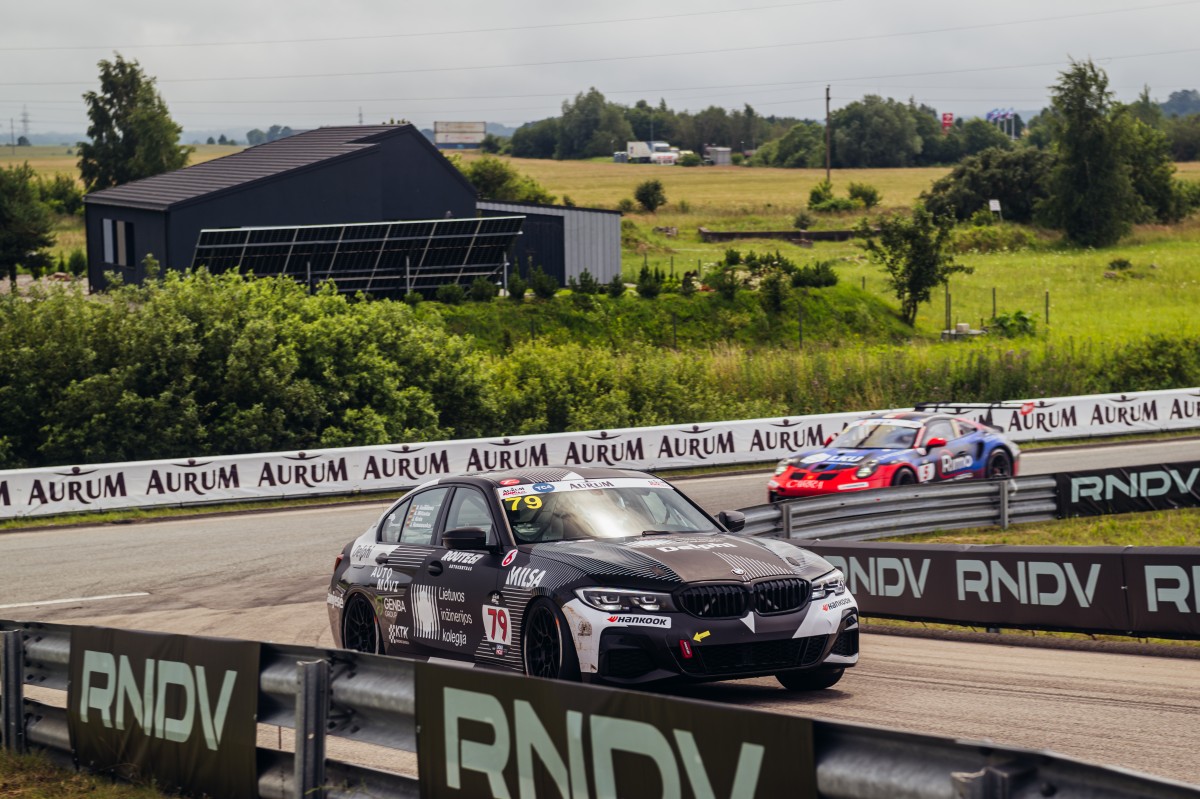
In last year’s race, the “LIK Racing by KTK” crew competing in the TC4 class finished second in their category and shortly after registration for the 2026 race opened, they submitted two entries to participate in the race.
P. Bonkevičius, for whom this will be the team’s seventh start in Palanga, says that to compete, especially in endurance racing, it is certainly not necessary to have the most expensive and fastest car. “We have most often started in the production car category and, of course, we always try to fight and win in our class. We also compare ourselves in the overall standings, because even with simpler car we can compete with faster teams.
And regardless of what result we achieve, we simply enjoy racing. After all, every kilometer driven on the track brings joy. The main goal remains to see the chequered flag. Of course, racing also provides adrenaline and experience for the team, and allows us to show what kind of work we have done with students over the winter.”
The team manager and driver P. Bonkevičius, who has extensive experience on various racing circuits, also addressed those who are undecided about participating or believe that you need the fastest car to start. “First and foremost, we race against our competitors, which means within our class. Here I hold quite a strict position, because there are examples where amateur drivers say they only want to drive a GT car and are not interested in slower ones. However, you should start with the basics and begin with simpler ones.
When drivers and the team learn to fully exploit a production car, then you can take a step forward toward more powerful and expensive machinery. There are definitely good reasons to participate even with a standard car, and I encourage people to do so.”
The interviewee says that he holds this firm view about starting a racing career with simpler cars for very clear reasons, one of them being the cost of mistakes. When driving a simpler, slower car, the budget becomes much more manageable, and the racing path feels more accessible.
“Thinking that the higher the class and the faster the car, the more professional you are as an athlete is completely unfounded. Looking at global practice, we see that professionals compete with both faster and slower cars, and no one judges a driver’s professionalism based on the car they choose.
Racing takes place between direct rivals – if we compete with a production car, we do not think about winning the overall classification,” P. Bonkevičius comments, adding that racing an ordinary car against evenly matched competitors is far more enjoyable than driving a supercar with no real rivals.