
2026-06-22
Baltics’ Largest Motorsport Festival Presented on Gediminas Avenue in Vilnius
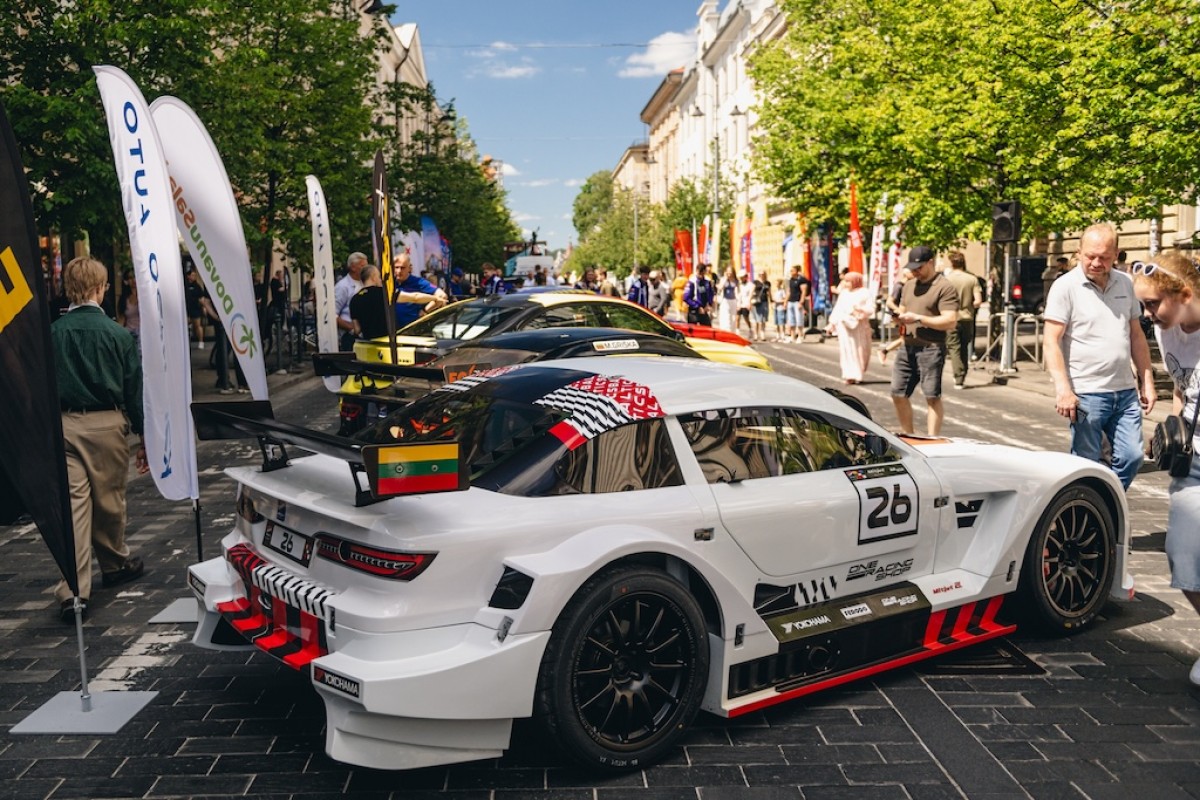
Less than a month remains until the largest motorsport event in the Baltic States – the “Aurum 1006 km Powered by Hankook” race. To mark the occasion, Vilnius’ Gediminas Avenue briefly transformed into a racing village on Saturday, where residents and visitors alike had the opportunity to see this year’s competitors and race cars up close, as well as learn about the latest developments surrounding the event.
The 27th edition of the “Aurum 1006 km Powered by Hankook,” taking place in Palanga from July 15–18, will once again bring together the strongest teams from Lithuania and abroad. Twenty-two teams have already registered, and experience shows that the number typically grows rapidly as race day approaches.
However, the race weekend has long since evolved beyond the 1006-kilometre endurance race itself.
A Packed Program at the Race Village
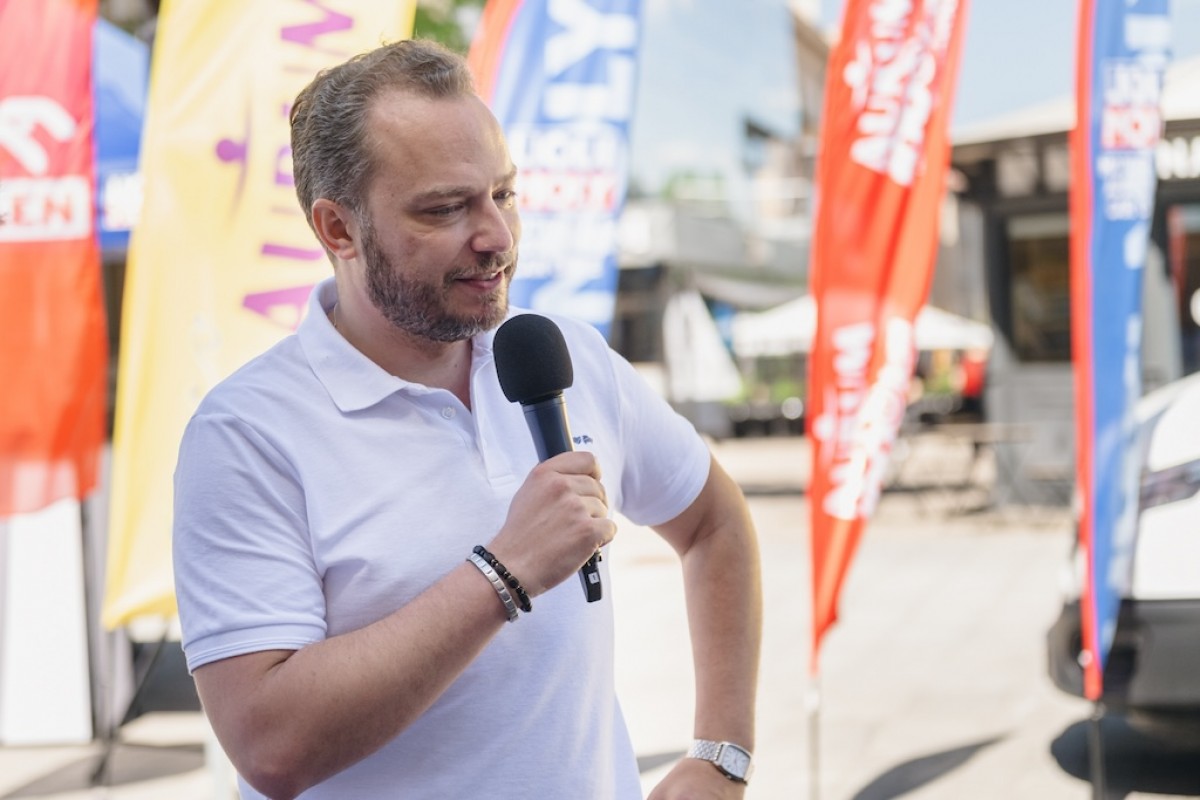
“This event is about much more than a thousand-kilometre race. Historically, that’s how it developed, and we have worked consistently toward that goal. We have made a deliberate effort to create a motorsport festival where different audiences can experience different emotions. The foundation is, of course, Saturday’s main race, but across all the weekend’s events, we will have more than 200 vehicles participating this year,” said Darius Jonušis, Director of the public organisation “1000 km Race” and the event’s chief organiser, speaking on Gediminas Avenue.
Over nearly three decades, the event has grown into one of the largest automotive culture and motorsport festivals in the region. As every year, visitors in Palanga can look forward to much more than the headline endurance race. The programme includes traditional drag racing competitions, “dB Drag” contests for car audio enthusiasts, displays of historic and unique vehicles in the “Motor Fest” zone, a spectator slalom competition, and the now well-established “Women’s Challenge,” sponsored by “Olybet.”
“The event has survived for 27 years probably because every year we think about how we can expand and enrich what we already have. That’s how drag racing, ‘Motor Fest,’ the spectator slalom, and at one point even drifting became part of the programme. Individual events are introduced, tested, and if they work well, they become a long-term part of the festival,” Jonušis explained.
According to him, the variety of activities is now one of the festival’s greatest strengths. While some spectators follow the action on the track, others choose to watch drag races, explore rare historic vehicles, or evaluate powerful sound systems. Meanwhile, the most enthusiastic visitors can even test their own skills on the slalom course.
This year’s programme will also feature a new addition – a round of the “Mitjet Baltics” championship. Organisers hope it will become a permanent part of the festival.
“This year, ‘Mitjet’ will race in Palanga for the first time, and I would very much like to believe they will become part of the weekend for many years to come. Of course, we’ll see how things go after the event, but today I’m genuinely pleased with this decision. Our goal is to be the best event possible, create more excitement, and make as many people happy as we can,” said the organiser.
Long-Standing Traditions – An Essential Part of the Summer in Lithuania
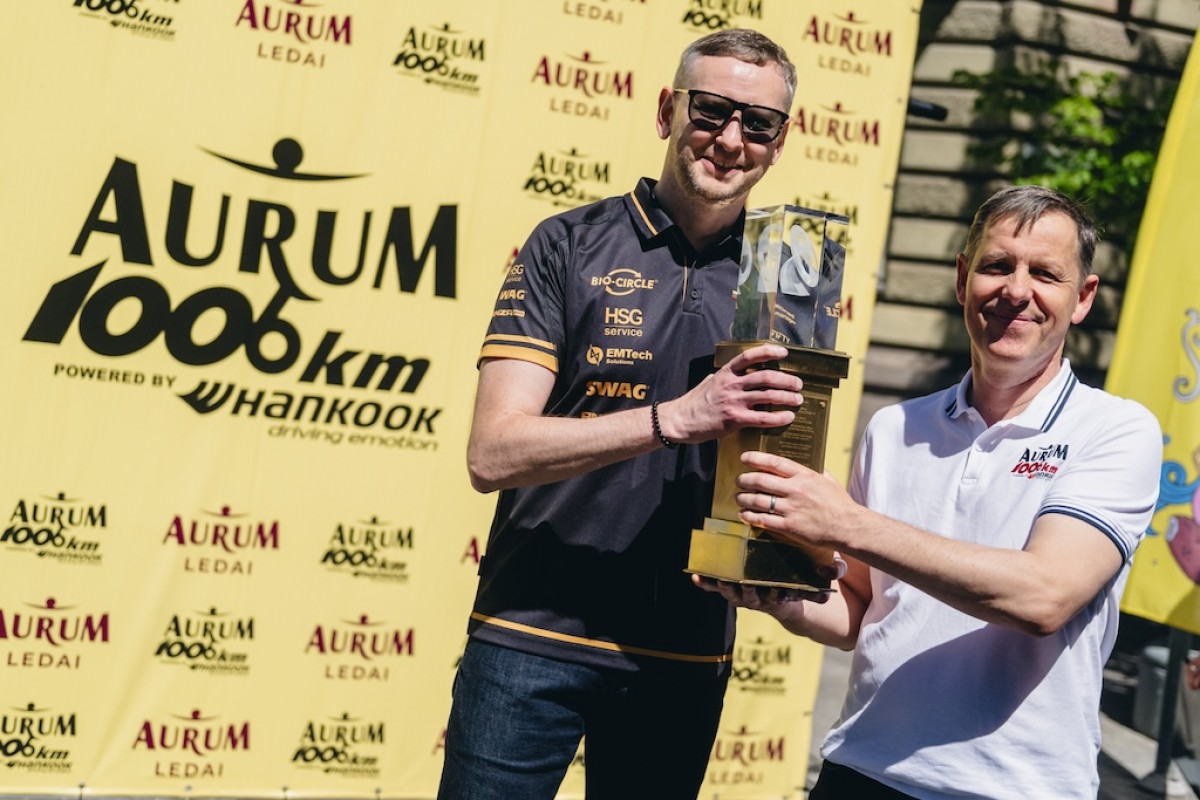
One of the highlights of the presentation on Gediminas Avenue was the return of the main race trophy to the organisers. The perpetual winners’ trophy was brought to Vilnius and handed back to Darius Jonušis by last year’s champions, the “Bio-Circle & HSG by SWAG” team.
In less than a month, the trophy will return to Palanga, where the names of the new champions will be engraved on it. According to Minister of Transport and Communications Juras Taminskas, traditions such as this are what create the event’s unique atmosphere.
“These races have their own history and their own symbols. The awarding of the Super Pole trophy is one such tradition that combines sporting drama, the importance of qualifying, and respect for the competitors. Qualifying is not merely a formality. It determines the starting positions for the main race, and it is often during qualifying that we see the fastest laps and even track records,” Taminskas said.
The minister emphasised that over the past 27 years, the event has become an inseparable part of the Lithuanian summer.
“An entire generation has grown up with these races, and now a second generation is doing the same. That demonstrates that the event has not only sporting significance but cultural significance as well. Events like this become part of the traditions of both the local community and the country as a whole,” he noted.
Speaking about the upcoming race and the spectators travelling to Palanga, the minister also reminded the public that extensive roadworks will affect summer travel this year.
“Everyone wants adrenaline, action, entertainment, and a great event, but nobody wants inconvenience. This year there will be challenges on the motorway from Kaunas as well, because we will be repairing more than 100 kilometres of highway.
Sections of 20–30 kilometres are currently under reconstruction, so I am prepared for the inevitable criticism that comes whenever roadworks are underway. But it has to be done, and things will be better afterwards. People will still travel to the seaside, because what is summer without the coast – without our own Lithuanian seaside? I have always believed that people should choose our Lithuanian coast rather than fly to Turkey.”
Racing and Innovation always next to each other
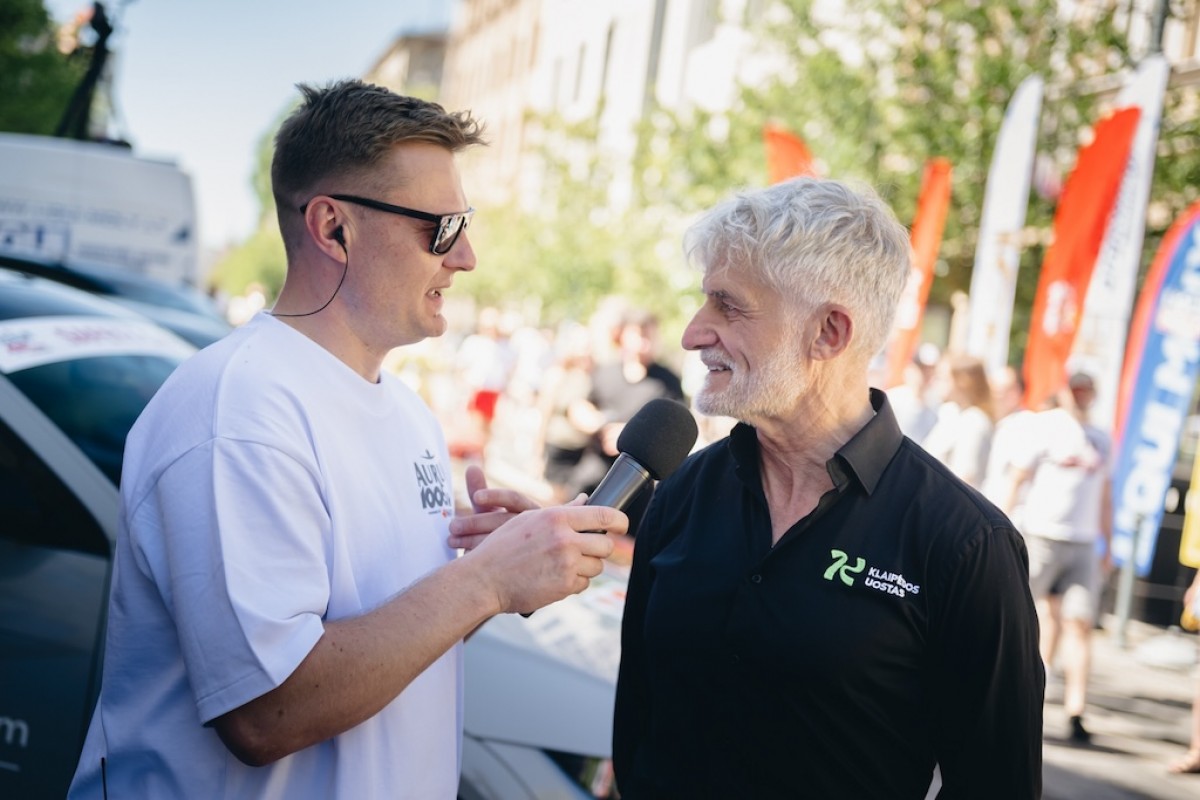
The presentation on Gediminas Avenue showcased not only racing machinery but also future mobility technologies. Algis Latakas, General Manager of the Klaipėda State Seaport Authority, spoke about Lithuania’s developing green hydrogen infrastructure and its potential in the transport sector.
“Hydrogen is still considered an innovation today, but it is also a very real direction for the future. In Klaipėda, we have already started producing it, and we now have both a hydrogen-powered car and even a hydrogen-powered vessel. This shows that we are not talking about some distant future but about solutions that are already working today.”
Latakas also presented a hydrogen-powered vehicle that will take part in one of the race weekend’s events this year.
“The car itself drives very smoothly and performs very well. It is not yet at GT3 level and probably won’t compete in the main race, but I believe it will perform very well in the Women’s Challenge. And not just because it will be the only one of its kind – the women won’t let it down. They will have to perform extremely well so that the car can demonstrate strong sporting results too.”
Meanwhile, Jolanta Iselionienė, organiser of the “Women’s Challenge” sponsored by “Olybet,” announced that the event has already reached its maximum number of participants – one hundred.
“Participants will face a route of approximately 200 kilometres: around 100 kilometres following a roadbook and another 100 kilometres of transit sections between time-control points.”
The presentation on Gediminas Avenue once again highlighted the fact that the “Aurum 1006 km Race” has long since become much more than just a race. It is a four-day motorsport festival where professional competition, technology, automotive culture, and tens of thousands of visitors come together every midsummer in Palanga for one purpose – to experience the largest motorsport celebration in the Baltic States.